Accra, June 18, 2026 — Ghana and UNESCO have reaffirmed their commitment to strengthening cooperation on cultural heritage preservation, restitution of cultural artefacts, and capacity building, as both parties seek to advance efforts aimed at safeguarding the country’s rich cultural legacy and promoting justice through the return of looted cultural property.
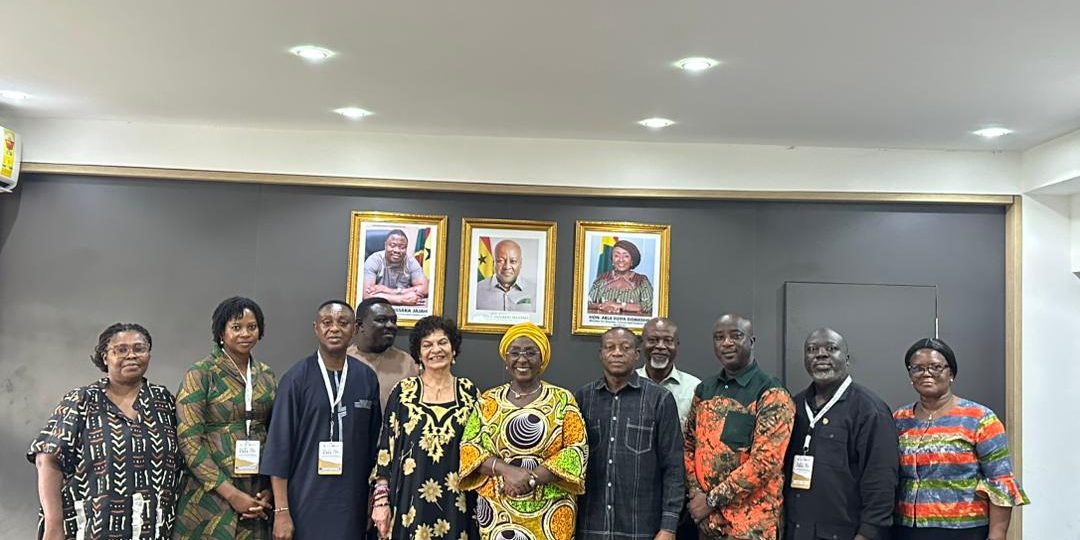
The renewed commitment emerged during a meeting between the Minister for Tourism, Culture and Creative Arts, Abla Dzifa Gomashie, and UNESCO Assistant Director-General for Natural Sciences, Ms. Lidia Brito, on the sidelines of ongoing discussions on reparations, reconciliation and cultural restitution.
Hon. Gomashie reiterated Ghana’s determination to implement recommendations contained in UNESCO’s recent Reactive Monitoring Mission report and improve the management of the country’s heritage assets.
“We recognise the challenges before us, but we are taking concrete steps to address them. We have changed gear and remain committed to implementing the necessary reforms to strengthen heritage conservation and management in Ghana,” the Minister stated.
She revealed that the Ministry had already commenced a week-long capacity-building workshop for professionals of the Ghana Museums and Monuments Board to address skills gaps identified within the heritage sector.
The Minister further underscored the importance of international partnerships in supporting Ghana’s heritage preservation agenda and facilitating the return of artefacts currently held abroad. According to her, discussions are underway to improve infrastructure for preserving returned artefacts, including plans to develop new museum spaces capable of accommodating future restitutions.
Hon. Gomashie also reaffirmed Ghana’s commitment to working with regional and international stakeholders on reparations and restitution, stressing that meaningful progress would require collaboration among governments, academic institutions, development partners and cultural organisations.
She praised President John Dramani Mahama’s leadership on reparations, cultural diplomacy and African unity, noting that his advocacy had helped strengthen partnerships across the continent and position Ghana at the forefront of the global reparations movement.
On her part, Ms. Brito commended Ghana’s leadership in advancing the reparations agenda and acknowledged the country’s role in building international support for initiatives related to restitution and historical justice.
She congratulated Ghana on the recent launch of its new Cultural Policy and the introduction of measurable implementation indicators through 2030, describing the initiative as a major milestone for cultural governance.
According to Ms. Brito, strong cultural policies are essential for promoting democracy, dialogue, youth empowerment and sustainable development while helping citizens maintain connections with their history and cultural identity.
The UNESCO official also encouraged Ghana to strengthen its engagement with UNESCO’s heritage protection mechanisms and leverage the organisation’s technical expertise to expand the country’s representation on the World Heritage List.
Although Ghana possesses significant historical and cultural assets, Ms. Brito observed that the country currently has only two UNESCO World Heritage Sites and urged authorities to pursue additional nominations that would showcase Ghana’s heritage to the world.
She welcomed the establishment of a proposed technical experts group on restitution under Ghana’s reparations framework and encouraged close collaboration between the panel and UNESCO’s existing mechanisms on cultural property restitution.
Ms. Brito further expressed UNESCO’s readiness to support Ghana through technical assistance, capacity-building programmes and peer-learning initiatives, including the possibility of hosting regional heritage management meetings in the country.
She also highlighted UNESCO’s efforts to promote the restitution of stolen cultural objects through international cooperation and digital heritage initiatives, noting that Ghana’s active participation would contribute significantly to global efforts aimed at restoring cultural justice.
The meeting forms part of broader engagements between Ghana and UNESCO as both institutions seek to deepen cooperation on heritage conservation, cultural development and the restitution of African artefacts removed during the colonial era.
Present at the meeting were the Ministry’s Chief Director, Joseph K. Amoah; Director of Human Resource Management, Vitus Otto Langmagne; Director of Culture and Creative Arts, Divine Owusu-Ansah; Director of RSIM, Mabel Cudjoe; and Director of Tourism, Dr. Geoffrey Tamakloe.
Source: PR UNIT MoTCCA